
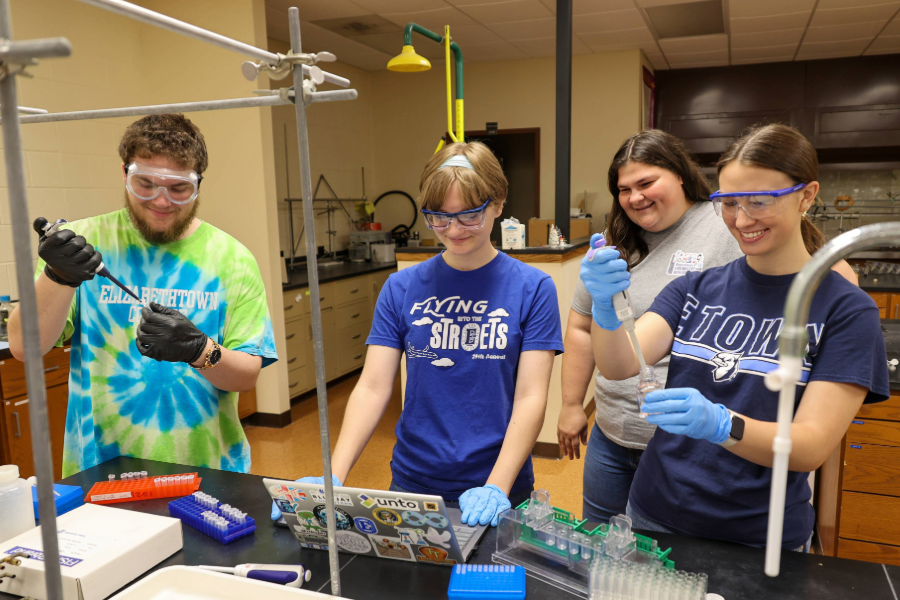
Biochemistry and molecular biology majors Samantha Small ’26 and Spencer Mefford ’26, along with biotechnology major Kellie Simon ’26, are investigating how protein kinase allosteric sites can be targeted for new therapeutic treatments as part of Elizabethtown College’s Summer Creative Arts and Research Program (SCARP).
Working under the guidance of Assistant Professor of Biochemistry Amy Defnet, the students are conducting in-depth cellular and genetic research that could lead to more personalized and effective treatments for conditions like cancer, asthma, and steroid-resistant inflammation. This project is a continuation of a 2024 SCARP project.
Title of Research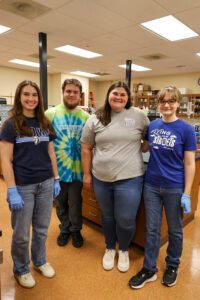
Investigation of Protein Kinase Allosteric Sites for Targeted Therapeutics
Student Researchers
Spencer Mefford ’26 and Samantha Small ’26 (Biochemistry & Molecular Biology)
Kellie Simon ’26 (Biotechnology)
Faculty Mentor
Dr. Amy Defnet, Assistant Professor of Biochemistry, Chemistry & Biochemistry
What are you researching?
Mefford: We are all targeting different aspects of the overall topic. I for example, am working on determining what proteins (and later down the line genes) are expressed when elevated levels of estrogen are present. This will then give me a jumping off point to look at the genes associated with said proteins to figure out what protein-DNA complexes can crop up when estrogen is present. This will hopefully shed some light as to why women seemingly grow into asthma and men grow out of asthma
Simon: Although Sam, Spencer, and I are all working under the same project, we each have our own unique contributions. For myself, I am working to transfect A549 and HDFT2 cells with cDNA and siRNA. After increasing or silencing gene expression, we then harvest the cells and quantify the presence of various AP-1 transcription factors, which are proteins involved in regulating the cell cycle. Ultimately, this will allow us to better understand the interactions between these proteins and potentially discover a target for inhibiting cell proliferation. With this knowledge, it is possible to create alternative treatments for steroid-resistant inflammatory conditions.
Small: The ultimate goal of our project is to explore and characterize the effects of modern drug treatments against cancer. My research focuses on assessing how cancer treatments may have different effects depending on ethnicity and gender; by characterizing the response to treatment in cells of the same cancer, but from different origins, this research could suggest that cancer treatments can be made more effective by tailoring them to the individual.
Why did you choose this topic?
Mefford: The instructor gave a broad overview of what she wanted to look at, and based on my experience with assays, my thought process went to what I have experience with and what I want to learn more about. I really like assays as a whole, so it was kind of a no-brainer on what I wanted to do.
Simon: Personally, I chose this topic because I have a strong interest in biomedical research. It is an honor to know that my research may contribute to the discovery of novel medical treatments for individuals suffering from asthma. Also, as a biotechnology major, I love practicing the cell culture techniques used in this project. This type of research is simply fascinating to me.
Small: My career goal is to obtain a PhD in Immunology and engage in research at an R1 institution, so I am very excited to turn my passion into tangible results and get a head start on graduate-level research.
What is the most interesting aspect of this research?
Mefford: The most interesting part of this research is how methodical everything can be, to even get to the stage where I can start running test, we have to culture cells, which can be very finicky sometimes, and then after their cultured, theirs the entire process of harvesting the protein. My favorite part is when I finally have some hard numbers to analyze some data with and make a fancy graph to help draw a conclusion about the data. Overall, I just love it when everything finally comes together and you’re able to finally start clicking the pieces together.
Simon: I find that the most interesting aspect of this research is the demand for flexibility in our schedule. When working with living samples like cells, it is imperative that we adjust our research to the needs of the cells. For example, if the cells are not confluent in the flask, we have to wait another day before we can treat them. Because of this, we are often required to quickly adjust our research plans for the entire day. The element of surprise keeps us on our toes.
Small: This project involves drugs that are currently in clinical trials for cancer treatment, so performing research that contributes to an actively growing topic makes me feel more connected within the scientific community.
What are you hoping to accomplish through this research project?
Mefford: Get more of a handle on the process of doing research and get more confident in developing my own steps to answer a research question. If I learn more about biochemistry down the road, that will also be a plus. Overall, just learning new things through this project is always a pleasure.
Simon: Through this project, I hope to strengthen my knowledge of cell culture techniques and other biochemistry laboratory protocols. Also, I hope this experience will help me decide whether I should pursue biomedical research as a career. Most importantly, I hope I will have fun while completing my project!
Small: My personal goal is to gain practical experience in biological lab techniques and the research process to prepare for graduate school. I also hope to contribute my findings to the scientific community by publishing our results.
Talk about working with your mentor. How have they helped you throughout this experience?
Mefford: I Couldn’t have asked for a better mentor. Dr. Defnet helps guide us to ways to tackle an issue and makes sure we are comfortable with new techniques until we can do it without her presence. It also helps that she is a great person to be around and is very knowledgeable.
Simon: Working with Dr. Defnet has been a wonderful experience. As a woman in STEM myself, it is inspiring to see a female balancing academia and motherhood. Aside from this, I also appreciate Dr. Defnet’s patience in the lab and her genuine interest in knowing her students as people, not only researchers. Overall, Dr. Defnet has been a great inspiration and has made me feel welcome in the field of biochemistry research.
Small: Dr. Defnet has been very helpful by patiently and clearly demonstrating new techniques and teaching approaches to troubleshoot as we collect more data. I have gained a lot of experience already through hands-on learning and making decisions to direct our research.
Hear from the faculty mentor – Dr. Amy Defnet
“SCARP is a fantastic program that allows students to dive into research in a way that really prepares them for grad school or industry. Students are able to be much more productive during the summertime and achieve results that would take weeks during the normal semester schedule. In addition, there are many more opportunities for networking and meeting other students with similar interests, which can bring a lot of positive momentum into the classroom each Fall. I think my favorite part of the program is the opportunity to help and see students grow in their research abilities and independence while they develop creative ideas for experiments.”
