
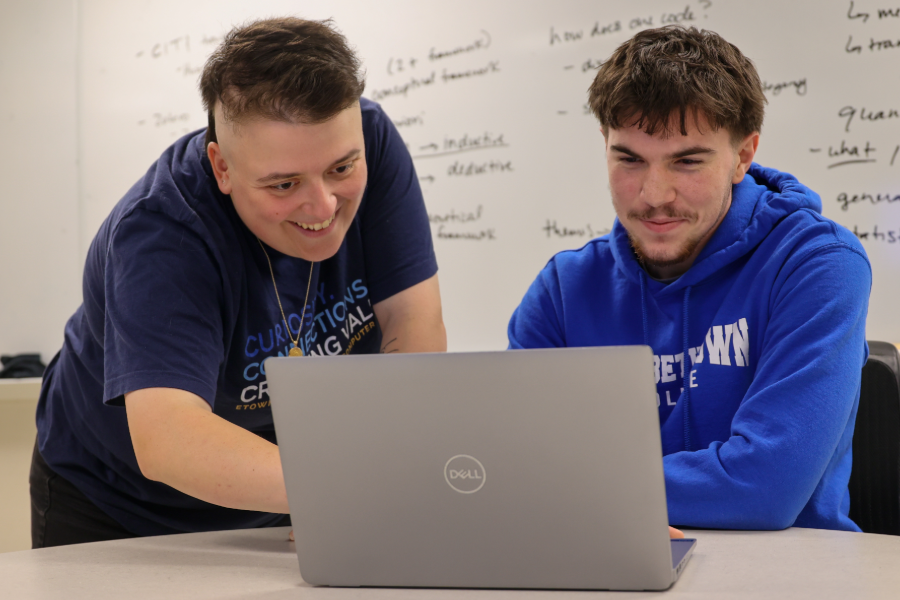
 Engineering major Kai Glick ’29 is researching how ethics is presented across Accreditation Board for Engineering and Technology (ABET)-accredited engineering programs nationwide as part of Elizabethtown College’s Summer Creative Arts and Research Program (SCARP).
Working with Assistant Professor of Engineering Dr. Shannon Clancy, Glick is examining how colleges and universities communicate ethical principles through program descriptions, coursework, and other publicly available resources.
Title of Research
Ethics Curriculum in Accredited Engineering Programs
Student Researcher
 Kai Glick ’29 (Engineering major)
Faculty Mentor
Dr. Shannon Clancy, Assistant Professor of Engineering
What are you researching?
Glick: In my research, I am collecting and analyzing information from ABET-accredited engineering programs throughout the U.S. to understand how they discuss ethics in engineering, if they do at all. Any ABET-accredited program is required to meet certain ethical guidelines, but individual schools differ in their presentation and methods of fulfilling these guidelines. I am looking at any public information I can find on each school’s website (including general introductions to engineering and their program, as well as course names and descriptions) to take note of when and how information on ethics is introduced.
Why did you choose this topic?
Glick: Dr. Clancy approached me with the opportunity to apply for this SCARP project after I completed her EGR191 course in the fall and demonstrated my interest in ethics and societal impact in engineering work.
What is the most interesting aspect of this research?
Glick: So far, the most interesting aspect of this research has been learning about the stigma that exists around ethics in the engineering profession. We have read a few fascinating papers in preparation for and throughout our own data collection, and one that stuck out to me described a “culture of engineering,” in which students come to understand their work and their responsibility to society as an engineer. The paper also describes how this culture has been heavily influenced to view ethics and broader societal impact as irrelevant to the practice. Looking through the lens of this phenomenon, it has been very interesting to see the ways schools talk about ethics, the words they use, and how easy or difficult the information is to find. I am very curious to see the patterns that emerge.
What are you hoping to accomplish through this research project?
Glick: My research project is likely the very beginning of a more complicated discussion on the issue of ethics education in engineering disciplines. My data is not directly indicative of curriculum success or ethics learning outcomes in these programs, but it does show the information each school has selected to display publicly. It also gives us a baseline for understanding where we currently stand and what improvements can be made. Through this project, I hope to gain insight into the way ABET-accredited schools discuss ethics and begin drawing connections to conceptualize how the aforementioned “culture of engineering” might impact that discussion. If we understand how and why the stigma around ethics exists in engineering, like any other problem, we can begin to deconstruct it and craft solutions.
Talk about working with your mentor. How have they helped you throughout this experience?
Glick: Dr. Clancy has been a great mentor. I love that the project is mostly independent, because I feel she places a lot of trust in me to complete the work efficiently and competently. Even so, she is always available and responsive to questions, and offers me a combination of verbal instruction and written resources to help me keep moving forward. I have appreciated that they assure me I do not have to have a final product or an idea fully fleshed out before I can come talk to them about it. The environment is relaxed, and we can have interesting, passionate discussions about our research and the underlying themes and issues.
Hear from the faculty mentor – Dr. Shannon Clancy
“Kai has been an immense pleasure to work with. He is curious, organized, independent, and willing to try new approaches. For example, he created a Microsoft Form to collect data from different schools, recognizing that their websites vary and do not always provide the same information. His natural curiosity, thoughtful questions, and desire to learn more have served him well as he continues developing his skills as a researcher.”